
Questions to Ask Before Hiring Travel Advisor
Hiring a travel advisor is not about finding someone who can book a trip.
It’s about choosing who will guide decisions when the stakes are high.
Before you commit, the right questions can reveal how an advisor thinks, plans, and protects your experience — long before anything goes wrong.
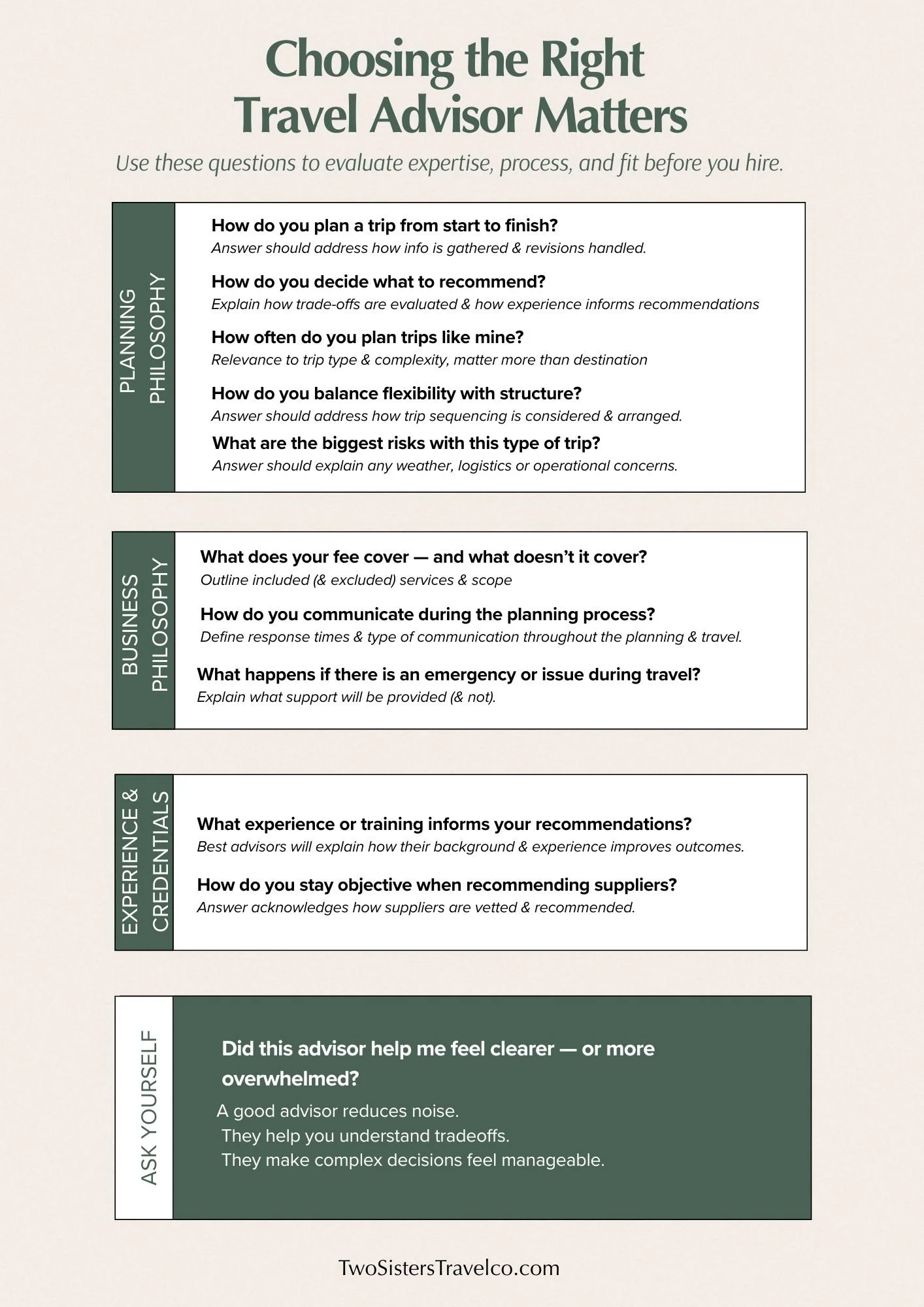
This guide outlines the most important questions to ask a travel advisor before hiring, and why each one matters.
These questions help you evaluate whether an advisor is the right fit—but first, understand why choosing a travel advisor is about managing what can't be replaced.

Why Asking the Right Questions Matters
Most travelers ask surface-level questions:
“How much do you charge?”
“Where have you been?”
“Can you get me a deal?”
More useful questions go deeper.
They help you understand:
How decisions are made
How risk is managed
How problems are handled
Whether the advisor’s approach fits your trip
The goal isn’t to interrogate — it’s to evaluate.
Questions That Reveal How a Travel Advisor Thinks
1. “How do you plan a trip from start to finish?”
This is one of the most important questions you can ask.
A strong answer should include:
How information is gathered
How priorities are set
How recommendations are sequenced
How adjustments are handled
If the process feels unclear or improvised, that’s a signal worth noting.
Good planning is intentional — not reactive.
2. “How do you decide what to recommend?”
This question reveals judgment.
Listen for answers that explain:
Why certain options are chosen
How tradeoffs are evaluated
How your preferences shape decisions
How experience informs recommendations
If recommendations sound generic or trend-driven, personalization may be limited.
Beyond asking good questions, knowing what to look for in a travel advisor's answers helps you evaluate quality, not just information.
3. “How often do you plan trips like mine?”
Experience matters — but relevance matters more.
Ask about:
Similar destinations
Comparable complexity
Trip type (family, group, honeymoon, adventure, etc.)
You’re not looking for perfection — you’re looking for pattern recognition.
Questions About Fees, Scope, and Boundaries
4. “What does your fee cover — and what doesn’t it cover?”
Professional advisors are transparent about fees.
A clear answer should outline:
What services are included
What falls outside scope
When additional fees may apply
Clarity here protects both sides.
5. “How do you communicate during the planning process?”
This helps set expectations early.
Ask about:
Response times
Preferred communication channels
Check-in points during planning
Misaligned communication styles are one of the most common friction points.
6. “What happens if plans change?”
Disruptions are part of travel.
A strong advisor should be able to explain:
How changes are handled
What support is provided
What decisions may fall to the client
How emergencies are addressed
If this question is brushed aside, that’s a gap worth considering.
These questions help surface how an advisor manages risk—which is really what travel planning is all about.
Questions That Reveal Risk Management
7. “What are the biggest risks with this type of trip?”
This question tests honesty and foresight.
Good advisors acknowledge:
Timing constraints
Weather considerations
Operational challenges
Tradeoffs that may affect the experience
Every trip has limits. Ignoring them doesn’t make them disappear.
8. “How do you balance flexibility with structure?”
Travel planning is a balance.
You want:
Enough structure to protect key experiences
Enough flexibility to adapt when needed
This question reveals how an advisor sequences a trip — and how they protect momentum without overloading it.
Questions About Experience and Credentials
9. “What experience or training informs your recommendations?”
Credentials alone don’t guarantee quality — but they provide context.
Listen for:
How training is applied
How experience informs decisions
How the advisor stays current
The best advisors can explain how their background improves outcomes.
10. “How do you stay objective when recommending suppliers?”
This question helps clarify incentives and transparency.
A professional answer acknowledges:
Preferred partnerships
How recommendations are evaluated
Why certain suppliers are trusted
Objectivity builds trust.
The Most Important Question to Ask Yourself
After the conversation, ask yourself:
“Did this advisor help me feel clearer — or more overwhelmed?”
A good advisor reduces noise.
They help you understand tradeoffs.
They make complex decisions feel manageable.
That clarity is often the strongest indicator you’ve found the right fit.
Beyond how you feel after the conversation, there are concrete qualities and red flags to watch for when evaluating travel advisors.
How These Questions Fit Into the Bigger Decision
If you haven’t already, you may also want to read:
What to Look for When Hiring a Travel Advisor (and the Red Flags to Avoid)
Choosing a Travel Advisor: Managing Risk & What Can’t Be Replaced
Together, these pieces are designed to help you evaluate travel planning decisions with confidence — not pressure.
Final Thought
The right travel advisor won’t rush these questions.
They’ll welcome them.
Because choosing a travel advisor isn’t about booking a trip.
It’s about choosing how much risk you’re willing to manage alone.